
Area 1 — Foundations of Human Connection
-

From Perception to Balancing Action
Explore how perception shapes balancing responses—and how our actions change relationships, environments and the conditions of future perception.
-

Repetition, Familiarity, and What Feels Normal
Explore how repetition shapes habituation, sensitisation, familiarity and normality—and how new experiences can reinforce or revise perception.
-

The Conditions that Shape Perception
Explore how neurobiological, psychological, embodied and sociocultural conditions shape perception, balancing responses and human connection.
-

The Architecture of Continuous Sensory Learning
This article introduces the conceptual architecture of perception within the Human Connection Project, highlighting how sensory experiences are constructed rather than passively received. The interplay of biological, neural, and social factors shapes individual perceptions, leading to different interpretations of shared environments. Understanding this architecture is essential for fostering human connection.
-

Seeing Humanity as One Living System
The article emphasizes the importance of interdisciplinary research in understanding humanity as a complex, interconnected system. It explores how neuroscience, psychology, and anthropology collectively reveal the intricate layers of human behavior, from individual actions to cultural norms. By considering multiple perspectives, we can better comprehend and address social dynamics and foster meaningful connections.
-

How Individual Patterns Become Social Patterns
This article examines how ordinary human needs can evolve into group boundaries and social separations. It explains that while categorizing can aid social interactions, rigid patterns may lead to prejudice and exclusion. Understanding these processes through interdisciplinary research highlights potential for social transformation, emphasizing that small changes can create significant cultural shifts.
-
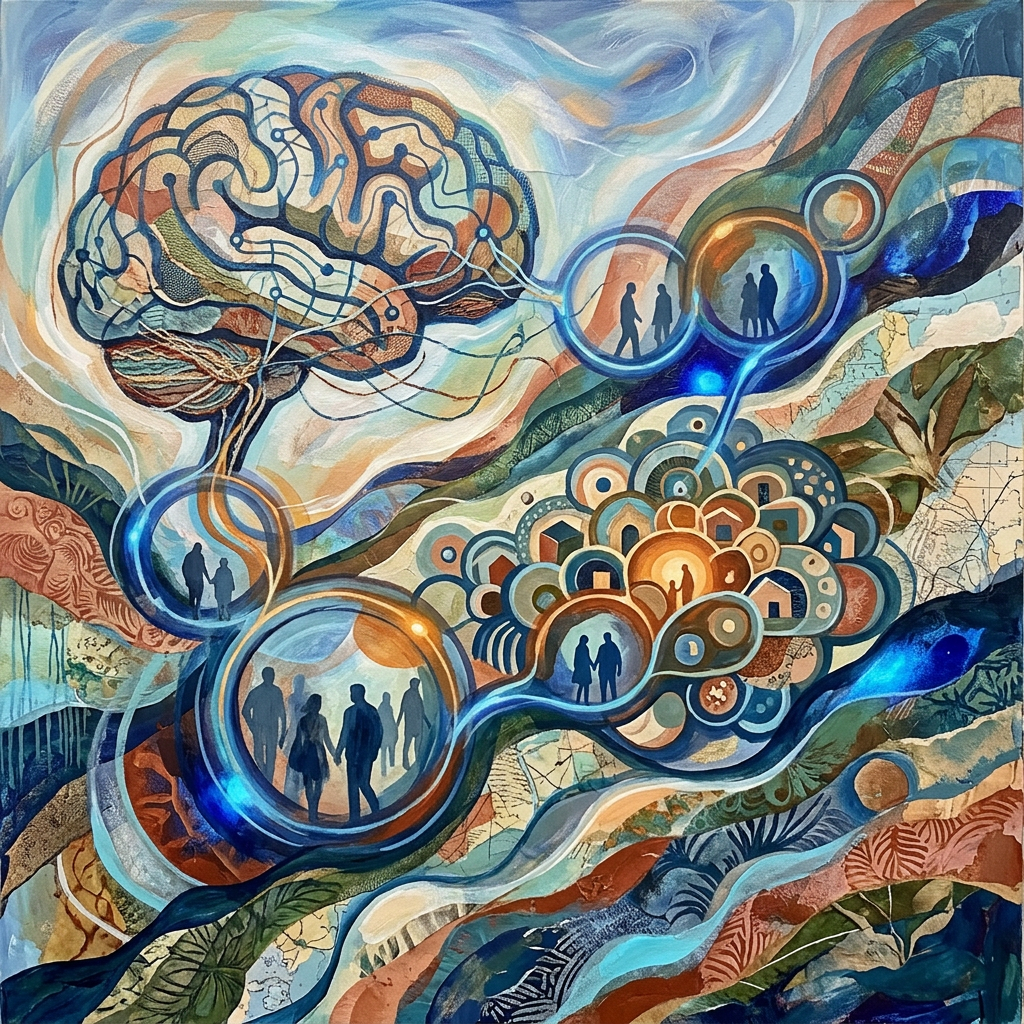
The Missing Bridge: How Relationships Connect Mind and Culture
This article, part of the Human Connection Project, explores the interplay between biology, psychology, and culture through relationships. It emphasizes how human interactions shape identity, expectations, and cultural norms. Relationships not only transmit culture but also regulate emotional experiences, illustrating their essential role in understanding human behavior and social dynamics.
-

We Do Not Simply Perceive the World — We Interpret It
This article explores how meaning, memory, and culture influence human perception and experience. By integrating insights from neuroscience, psychology, and anthropology, it highlights that individuals interpret similar stimuli differently based on personal histories and cultural contexts. Understanding these differences encourages curiosity and deeper engagement with others’ perspectives.
-

Why One Science Is Not Enough to Understand Humanity
This article highlights the importance of interdisciplinary research in understanding human behavior by examining the interactions between neuroscience, psychology, and anthropology. It emphasizes that human actions cannot be fully explained by a single discipline, as context, culture, and personal experiences significantly influence our thoughts, feelings, and relationships.