Revealing the Hidden Karmic Threads Within the Spiral Tree Code
In classical numerology, compound numbers (like 16, 23, or 31) are typically reduced to a single digit:
16 → 1 + 6 = 7
23 → 2 + 3 = 5
31 → 3 + 1 = 4
While this simplified approach has its strengths, it often hides what matters most. The reduced number offers a summary, but it rarely captures the deep karmic tension embedded within the original compound form.
In The Binary Soul, guided by the Spiral Tree Code, we approach compound numbers very differently.
We don’t choose between reducing and retaining. We do both — because both parts speak.
Dual Code Principle: Reduction + Sub-Number
Every number above 15 is viewed as a dual-layered archetype:
Reduced Microtype → the distilled energy currently expressing itself
Sub-Number → the unresolved karmic background beneath that expression
Both are essential. One is the behavioral mode; the other is the soul’s buried history.
What Are Sub-Numbers?
In the Spiral Tree Code, sub-numbers (compound numbers above 15) are deep karmic codes — energies from your soul’s past, encoded within your core numbers, waiting to be remembered and rewritten.
They are:
Residues of intense, often unintegrated soul experiences
Multi-layered challenges that were never fully resolved
Emotional or spiritual “crash sites” from previous lifetimes
Hidden in plain sight — because they’re buried within numbers we usually reduce
Sub-Numbers as Karmic Collapse Points
Take the number 31 as an example.
At a surface level, 3 (creativity, self-expression) + 1 (willpower, leadership) might seem bright and promising. But in the Spiral Tree Code, sub-number 31 represents something far more potent:
A deep-buried karmic issue that has caused the soul to fall — not once, but across many lifetimes.
These were not small mistakes, but sophisticated challenges to the soul’s legacy, so complex they caused a kind of falling symphony — a collapse of personal or spiritual power.
The result: being stuck in the past. Not just emotionally, but energetically. For lifetimes.
These karmic imprints often go unnoticed, sealed off within the soul’s deeper memory. But if a number like 31 shows up as part of your Life Path, Expression, or even the sum of your name, you are being called.
This lifetime is not about repeating the fall. It’s about rewriting the story.
Sub-Numbers Invite Soul Responsibility
The Spiral Tree Code doesn’t see sub-numbers as “bad luck.” They are epic invitations — to take responsibility, to dig deep, and to resolve what your soul left unfinished.
Each sub-number contains:
A karmic paradox (e.g., 3’s desire for freedom vs. 1’s need for control)
A historical pain pattern (e.g., betrayal, collapse, abuse of power, abandonment)
An opportunity to break the loop, once and for all
These patterns are not superficial. They’re not meant to be rushed through. But you don’t have to repeat them anymore.
Why This Work Matters
Most people live only through their reduced numbers — which means they navigate life using just a fragment of their energetic blueprint. But when we include sub-numbers, the chart becomes a living soul map — pointing directly to the hidden roots of long-standing emotional, spiritual, or relational challenges.
Understanding your sub-numbers helps you:
Spot ancestral or karmic traps
Reclaim power that was lost or misused
Make wiser choices about energy, purpose, and partnership
Feel seen in ways traditional systems often miss
What’s Next?
In Section II, we’ll dive into how to interpret your reduced number (from 16+ down to 1–15) as a 4-bit microtype — and what that says about your current soul mode.
Then in Section III, we’ll return to the sub-number itself, decoding the emotional and karmic tension between its digits (like 2 + 7, or 1 + 6), using real examples and archetypal pairings.
✨ Until then, reflect on this:
What numbers are buried in your chart that you’ve always reduced… but never fully listened to?
💬 Comment your compound numbers below if you’re curious what your deeper soul code reveals.
In traditional numerology, personal numbers like your Life Path, Expression, or Soul Urge are seen as powerful indicators of your identity, personality, and destiny. These numbers are derived using established methods like the Pythagorean system, which assigns numbers to letters and reduces them to single digits.
But what if these numbers were just the surface?
In the Binary Soul system, powered by the Spiral Tree Code, your personal numbers are more than fixed traits — they’re archetypal energy codes, made up of 4-bit binary sequences that reflect not just who you are, but how you evolve.
Let’s explore how this translation works — starting with core number calculations and the direct 4-bit archetypes from numbers 1 to 15.
Core Numbers Refined — With Obama as Our Ongoing Example
These are the foundational numbers we work with in both traditional and Spiral Tree Code numerology:
Before we translate personal numbers into 4-bit binary codes, let’s briefly revisit the four core numbers used in both traditional numerology and the Spiral Tree Code:
These are:
Life Path Number
Expression (Destiny) Number
Soul Urge (Heart’s Desire) Number
Personality Number
Each of these will be translated into a 4-bit microtype, revealing the soul’s inner dialogue and outer energetic expression.
For demonstration purposes, we’ll use Barack Obama as our central example throughout this article series.
Why Obama?
His life reflects major archetypal themes: identity, leadership, justice, legacy.
His chart includes karmic tension and stable mastery—perfect for showing stable vs transitional codes.
He is globally known, making it easier for readers to connect theory with real events and behavior.
Quick Calculation Guide Using Pythagorean Numerology (Reminder Only)
📍 For full accuracy, always use the complete birth name and date as listed on the birth certificate.
1. Life Path Number
Add all digits of the birthdate (YYYY + MM + DD). ➡️ Reduce to a single digit or Master Number (11, 22, 33). Obama: August 4, 1961 → 8 + 4 + 1 + 9 + 6 + 1 = 29 → 2 + 9 = 11
✅ Life Path = 11
2. Expression (Destiny) Number
Add the full numerical value of all letters in the full birth name (A=1, B=2… I=9, J=1…) ➡️ Reduce to a single digit or Master Number.
Full Name: Barack Hussein Obama ➡️ Total sum B (2) + A (1) + R (9) + A (1) + C (3) + K (2) + H (8) + U (3) + S (1) + S (1) + E (5) + I (9) + N (5) + O (6) + B (2) + A (1) + M (4) + A (1) = 64 → 6 + 4 = 10 → 1 + 0 = 1
✅ Expression Number = 1
3. Soul Urge Number (Heart’s Desire)
Add the numerical values of vowels only in the full name. ➡️ Reduce to single digit or Master Number.
Vowels in “Barack Hussein Obama” = A, A, U, E, I, O, A, A → sum = 27 → 2 + 7 = 9
✅ Soul Urge = 9
4. Personality Number
Add the numerical values of consonants only in the full name. ➡️ Reduce to single digit or Master Number.
Consonants = B, R, C, K, H, S, S, N, B, M → sum = 37 → 3 + 7 = 10 → 1 + 0 = 1
✅ Personality = 1
Each of these numbers is converted into a 4-bit binary code, which reveals both your inner drive and outer interaction style — your microtype.
Direct Binary Translation: Numbers 1–15
How Core Numbers Become Microtypes in the Spiral Tree Code
In traditional numerology, numbers are usually reduced to a single digit (1–9), and Master Numbers like 11, 22, and 33 are given special treatment. But in the Spiral Tree Code, we use a more precise and layered approach by working with numbers 1 through 15 directly.
Why 1 to 15? Because each of these numbers fits perfectly within a 4-bit binary system:
1 = 0001, 2 = 0010, … up to 15 = 1111
Each 4-bit code is split into:
Left Pair (Bits 1–2) – your outer world or ego
Right Pair (Bits 3–4) – your inner world or soul will
This structure reveals how your core numbers express themselves both externally (behavior, karma, stress) and internally (wisdom, longing, spiritual direction).
Let’s Decode Barack Obama’s Core Numbers:
We’ll now translate his traditional numbers into 4-bit microtypes:
Life Path = 11 → Binary: 1011
Left Pair (Ego) = 10 → Pressure, conflict, karmic friction
Right Pair (Soul) = 11 → Loyalty, attachment, deep emotional bonds
Interpretation: Obama’s life path contains intense karmic pressure to lead and reform (10), but he carries a soul code of emotional depth and commitment (11), which can also lead to holding on too long or carrying burdens not his own. His evolution lies in transforming pressure into purposeful leadership without being trapped by loyalty or expectation.
Expression Number = 10 → Binary: 1010
Left Pair (Ego) = 10 → Conflict, compression, challenge
Right Pair (Soul) = 10 → Insight, discernment, karmic awareness
Interpretation: As a public figure, Obama often faced high-stakes external tension (10), but inwardly he has the tools to see through illusions, identify patterns, and hold a long-term ethical vision. This microtype suggests he expresses himself through disciplined clarity—though not without confronting outer resistance.
Soul Urge = 9 → Binary: 1001
Left Pair (Ego) = 10 → External pressure, responsibility, karmic test
Right Pair (Soul) = 01 → Inner burden, service, self-sacrifice
Interpretation: Internally, Obama is drawn to service and compassion (9’s humanitarian essence shows through 1001). But this comes with a karmic tension: a soul pulled to care for others while managing intense outer responsibility. He must learn to serve without over-identifying with suffering or burnout.
Personality = 10 → Binary: 1010 (same as Expression)
As in his Expression number, the Personality Number 10 reflects a public presence shaped by external pressure and inner discernment. This suggests he appears as someone who brings calm strength under pressure, possibly perceived as composed, intelligent, and strategic, but also reserved or controlled under stress.
Why This Matters
By working with 4-bit binary microtypes, we don’t just assign traits — we decode patterns of soul growth, ego triggers, karmic tests, and inner wisdom. Decimal numbers like 10 or 11 are no longer “special cases” floating outside a standard system — they are part of a unified, energetic language that speaks in binary code.
In the Spiral Tree Code, every number from 1 to 15 is a living archetype. Your microtype is not just who you are — it’s how your soul moves through pressure, choice, and transformation.
Barack Obama’s chart is a perfect example of how public intensity and inner depth can work together. In upcoming articles, we’ll break down how these microtypes behave over time, how they evolve, and how to read them in your own soulprint.
Decimal — Binary Mapping Table
Decimal
Binary
Left Pair (Outer)
Right Pair (Inner)
0
0000
00
00
1
0001
00
01
2
0010
00
10
3
0011
00
11
4
0100
01
00
5
0101
01
01
6
0110
01
10
7
0111
01
11
8
1000
10
00
9
1001
10
01
10
1010
10
10
11
1011
10
11
12
1100
11
00
13
1101
11
01
14
1110
11
10
15
1111
11
11
What about you? What are your core numbers — Life Path, Expression, Soul Urge, Personality? Have you ever looked at them through the lens of binary code?
Try translating your numbers (1–15) into 4-bit format and explore what they might reveal about your soul’s journey.
👇 Feel free to share your numbers in the comments below — or let me know if you’d like help interpreting them through the Spiral Tree Code. I’d love to hear your insights!
🔜 What’s Next?
In Part 2, we’ll explore numbers 16 and beyond — the compound numbers. You’ll learn how to decode them as layered spiral archetypes, made of tensions between component digits, base reductions, and karmic stories.
You’ll also discover how these layers reveal much more than a single number can explain.
Stay tuned, and don’t just reduce your number — read your code.
A Spiral Expansion on Life Path, Names, and Karmic Codes
Numerology has always been a powerful tool for self-discovery. Systems like Pythagorean and Chaldean numerology have helped countless individuals explore their Life Path, Expression, and Soul Urge numbers — unlocking insight into personality, purpose, and destiny.
But what if there’s more?
What if these numbers don’t just define you — but also evolve with you?
This is where The Binary Soul, built through the Spiral Tree Code, offers a next-level refinement: not to replace classical numerology, but to expand it into a multidimensional energetic system — one that tracks your karmic inheritance, evolutionary spiral, and personal growth across time.
Honoring the Tradition
Before diving into this new model, it’s important to say:
Classical numerology is not wrong — it’s incomplete.
The Spiral Tree Code doesn’t deny the brilliance of Life Path analysis or the relevance of name-based calculations. It simply asks:
“What happens when we treat these numbers as part of a living code — one that spirals, shifts, and speaks to deeper karmic layers?”
Key Differences: Traditional Numerology vs. Spiral Tree Code
Below are just a few examples of how The Binary Soul reinterprets key personal numbers — not as static traits, but as interactive energetic fields.
1. Life Path Number
Traditional View: Your life’s purpose and path. Who you’re meant to become.
Spiral Tree View: The grounding point of your incarnation; a karmic directive, not a fixed identity. It’s a spiral field you revisit through patterns and relationships. → Translates into your Stable Microtype — revealing your lifelong transformation pattern, not just your “goal.”
2. Date of Birth
Traditional View: Your inherent gift or special trait.
Spiral Tree View: A karmic imbalance from past lives — a blind spot needing integration. → Reveals the missing energy your soul must stabilize for ascension.
3. Expression Number (Full Name)
Traditional View: Your natural talents and external capabilities.
Spiral Tree View: Your Blueprint for the New Life. Not what you can do — but how your soul intends to express and evolve through action. → Interpreted as a Stable Microtype, it maps how your inner and outer worlds must align for growth.
4. First, Middle & Last Name Numbers
Traditional View: Strengths (first name), hidden resources (middle), family legacy (last).
Spiral Tree View:
First Name = The Spark — initiates new growth cycles.
Middle Name = The Burden — unconscious weight from family karma.
Last Name = The Inheritance Spiral — ancestral codes that must be transformed.
5. Sub-Total Expression Number
The sum of all letters’s values of your full name before final reduction of the expression number
Traditional View: Often ignored; an intermediate sum.
Spiral Tree View: A Sub-Vibration Anchor — revealing hidden energetic blocks or inherited distortions.
6. Identity Initials (Name Initials)
Traditional View: Minor traits or outer expression symbols.
Spiral Tree View:Energetic Activators — points of tension or stagnation in the spiral that trigger looping patterns if unconscious.
7. Dominant Name Numbers
Traditional View: Core strengths or repeated traits.
Spiral Tree View:Habitual Spirals — energies you’ve overused in past lives. May either trap you in familiarity or, if transformed, become great strengths.
Why This Matters Before Binary Code
Before diving into the 4-bit microtypes, understanding these revised meanings is essential. Why?
Because:
Your Life Path, Date of Birth, Expression, and Name Numbers directly translate into your Stable Microtypes — the codes you carry for life.
Your time-based numbers and current time cycles trigger Transitional Microtypes — temporary codes showing what you’re working through now.
And your entire name matrix becomes the blueprint for decoding your soul tone, karmic terrain, and inner-outer spirals.
In traditional numerology, a number is a label.
In The Binary Soul, a number is a living pattern — a fractal spiral of behavior, emotion, and transformation.
From Fixed Identity to Evolving Energy
This shift isn’t just philosophical — it’s functional.
Instead of asking, “What number am I?” You begin asking, “How is this number moving through me right now?”
And that question leads you directly to the 4-bit codes, which show:
Your current energetic weather (transitional states)
Your lifetime soul field (stable archetypes)
Your binary soulprint — the full map of inner and outer evolution
In Closing: Evolving the Language of Number
The Binary Soul doesn’t discard traditional numerology. It upcycles it into a system for modern souls who need precision, depth, and evolutionary language.
You are not just your Life Path. You are a living code, spiraling through patterns with purpose.
Next up: decoding the 4-bit microtypes — your soul in motion.
Decoding Your Soul’s Dynamic Blueprint Through the Spiral Tree Code
In the digital world, 4-bit code is a fundamental unit of data — just enough to hold 16 unique values (0000 to 1111). But in the world of The Binary Soul, these 4-bit codes are far more than data — they’re energetic blueprints of who you are, how you evolve, and how you interact with others.
Welcome to the world of 4-bit microtypes, a central element of the Spiral Tree Code: a system that brings numerology, binary logic, and soul archetypes into a unified, living language.
From Essence to Evolution: What Is a Microtype?
Every person carries a 3-bit Soul Tone — your core archetype, or energetic “seed.” But life doesn’t stop at essence. As you move through relationships, challenges, time, and inner tension, that seed begins to spiral outward. This movement creates a 4-bit microtype — a snapshot of who you are in motion.
Your microtype doesn’t just describe your personality. It maps:
How your soul reacts to life’s pressure points
Where you are in your growth spiral
How your ego and soul interact
What patterns repeat — and why
The Architecture of the 4-Bit Code
Every 4-bit microtype consists of two binary pairs:
Right Pair (Inner): This represents your soul — your deeper will, wisdom, and spiritual guidance system.
Left Pair (Outer): This represents your ego — your outer behavior, karmic triggers, and worldly challenges.
This design isn’t random — it mirrors real life.
The ego (left pair) reacts. The soul (right pair) responds. Together, they form a living archetypal dialogue.
Two Modes: Stable and Transitional
4-bit microtypes function in two key ways, depending on context:
1. Transitional Microtypes – The Spiral in Motion
These microtypes represent phases you move through — energetic “weather patterns” tied to time, personal years, relationships, or inner turning points.
Fluid and changing
Often triggered by growth or crisis
Reveal how your soul processes transformation
Most active during time-based cycles
2. Stable Microtypes – Your Soul’s DNA
These are lifelong patterns, encoded in your Life Path, Destiny, and Soul Urge numbers. They reflect your core karmic blueprint — your Messenger Self.
Repeat over a lifetime
Define relationship dynamics and internal paradoxes
Aren’t meant to be “fixed” — but understood, integrated, and evolved
Transitional microtypes show what you’re walking through. Stable microtypes show what you always carry.
Interpreting Binary Pairs in 4-Bit Microtypes: Soul vs. Ego in Context
In the Spiral Tree Code system, every 4-bit microtype is made up of two binary pairs:
Left Pair (Outer World) → Often associated with ego expression, karma, or external conflict.
Right Pair (Inner World) → Connected to the soul, inner will, and spiritual awareness.
But here’s the key:
These pairs mean different things depending on whether you’re dealing with a Transitional Microtype or a Stable Microtype.
Let’s explore both.
Transitional Microtypes
Energetic states you pass through during key time cycles or inner transformation
🔸 Left Pair (Ego / Catalyst / Trigger Field)
This is where friction shows up — external tension, relational karma, or emotional flashpoints.
Binary
Interpretation
00
The Descent — stillness, pause, or emptiness after collapse. A void state.
01
The Loop — habitual behavior, repetition of patterns, karmic cycles.
10
The Pressure — growth stress, urgency, forced change.
11
The Chaos — emotional overwhelm, destabilization, psychic storm.
These are not flaws — they’re activation codes. They provoke movement and wake up the spiral.
🔹 Right Pair (Soul / Inner Knower / Spiritual Will)
This is your inner resource — the guiding voice trying to stabilize, teach, or support transformation.
Binary
Interpretation
00
Dormant — passive wisdom, waiting to awaken. A seed not yet cracked open.
01
Burdened — duty, guilt, over-responsibility. Carrying too much.
10
Discerning — clarity, karmic insight, the ability to see through illusion.
11
Bound — trapped by loyalty, obligation, or outdated ideals.
Together, the two pairs form a dialogue between the surface experience and the soul’s deeper knowing — revealing not just what is happening, but the soul’s awareness or insight of why it’s happening, and what inner wisdom is quietly emerging beneath the pattern.
Stable Microtypes
Lifelong soul configurations derived from your core numbers (Life Path, Destiny, etc.)
🔸 Left Pair (Ego / Relational Field / Life Arena)
This shows the types of external patterns you are repeatedly drawn into — your karmic classroom.
Binary
Interpretation
00
Nonconformist — friction with norms or identity roles; values detachment and independence.
01
Determined — charged to complete cycles, face truth, break chains.
10
Creator — rebuilder, innovator, system fixer; challenged to forge new paths.
11
Blind Justice — relational mirror; faces repeated tests of timing, projection, and balance.
These are not personality traits — they’re recurring energetic challenges and relational teachings.
🔹 Right Pair (Soul / Archetypal Witness / Messenger Self)
This reflects your soul’s approach to learning, healing, and transmitting your message.
Binary
Interpretation
00
Pause — the call to slow down, reassess, or wait before action.
01
Reflection — inward attention, recognizing hidden karma or emotional truth.
10
Break Legacy — dismantle family patterns, cultural conditioning, or inherited systems.
11
Let Go — surrendering attachments, patterns, identities, or timelines that block growth.
Stable codes don’t ask: “What’s happening now?” They ask: “What did I come here to work through, repeat, and eventually liberate?”
Summary: Binary Pairs as Soul-Ego Dialogues
Microtype Mode
Left Pair (Outer)
Right Pair (Inner)
Transitional
Emotional weather / activation field
Spiritual will / insight / inner guide
Stable
Karmic relationship field / life test arena
Soul strategy / healing posture / legacy resolver
Understanding whether you’re in a transitional or stable microtype unlocks new levels of clarity:
If you’re feeling emotionally raw or stuck, you may be inside a transitional code: fluid, shifting, and meant to pass.
If a pattern keeps repeating over years or decades, you’re likely encountering a stable microtype: a karmic message woven into your life purpose.
A Microtype Is a Dialogue
Each 4-bit microtype is a conversation between your soul and ego.
Example: Microtype 1001
Left Pair (10): You’re under pressure, feeling tested by external demands or relationships.
Right Pair (01): Internally, you feel burdened, like you’re responsible for everything.
Interpretation: You may feel like life is too much, but underneath, your soul is saying: “You don’t have to carry this alone. This pressure is not your punishment — it’s your portal.”
From Crisis to Consciousness
The beauty of this system is its transformational potential. When your inner pair becomes conscious, it starts to influence the outer pair — offering balance, insight, and empowerment.
“What if the chaos isn’t the enemy?” “What if the pressure is the soul’s way of waking up the ego?”
That’s how the spiral ascends.
Why This Matters
Understanding your microtype helps you:
Break free of emotional cycles
Navigate time-based challenges (like personal years or pinnacles)
Heal relationship dynamics
Understand your life’s repeating “theme” from a higher lens
This is practical spirituality — not about escaping life, but upgrading how you live it.
Coming Up Next
In future posts, we’ll dive into:
Real-life examples of specific microtypes
How to calculate your stable and transitional microtypes
How microtypes change through time (monthly, yearly, and karmically)
Healing and growth practices tailored to your specific binary code
Your soul isn’t static — it spirals. And the 4-bit microtype is your evolutionary fingerprint in motion.
One of the most common ideas in modern spirituality is that the ego is the enemy. We often hear that ego is the source of all suffering, illusion, selfishness, and attachment. Countless books, teachers, and traditions have emphasized that in order to reach the soul — or a “higher self” — the ego must be dissolved, transcended, or shed like a skin.
This perspective often stems from:
Eastern Spiritual Traditions: Concepts like anatta (no-self) in Buddhism, or the illusory nature of the individual self (maya) in Advaita Vedanta, have been interpreted in the West as a need to completely eliminate the ego.
Misinterpretation: Sometimes, the call to “transcend the ego” is misinterpreted as destroying it, rather than simply releasing one’s identification with its limited, conditioned aspects.
Focus on Egoism: Many people equate “ego” with “egoism” – meaning arrogance, selfishness, pride, and self-centeredness. If “ego” equals these negative traits, then of course, getting rid of it seems desirable.
But is that the full truth?
While this narrative has roots in valuable wisdom traditions like Vedanta, Buddhism, and certain mystical strands of Christianity, it’s far from the only valid way of understanding the ego. In fact, both modern psychology and more integrated spiritual systems are beginning to reclaim the ego—not as a villain, but as a necessary, even sacred, component of the human journey.
What Do We Really Mean by Ego?
In classical spiritual language, the ego often represents the part of us that:
Clings to control
Seeks external validation
Feels separation from others
Reacts from fear or desire
These are real dynamics — but they are not the totality of the ego.
Many other schools of thought, including various branches of psychology and even nuanced spiritual perspectives, offer a much more integrated and “considerate” view of the ego:
Western Psychology (Freudian, Ego Psychology):
The Ego as a Healthy Function: In psychology, particularly Freudian theory, the ego is a fundamental and necessary part of the psyche. It’s the part of our personality that mediates between the demands of the primal urges (id), the moralistic conscience (superego), and the external reality.
Reality Principle: The ego operates on the “reality principle,” helping us to perceive the world accurately, make rational decisions, and adapt to our environment. It’s responsible for conscious thought, memory, and problem-solving.
Healthy Adaptation: A strong, healthy ego is considered crucial for mental well-being, resilience, and the ability to function effectively in the world. It allows for a stable sense of self, boundaries, and the capacity for healthy relationships. Psychologists often work to strengthen the ego, not eliminate it.
Jungian Psychology (Ego as the Center of Consciousness):
Carl Jung distinguished between the ego (the center of consciousness and personal identity) and the Self (the totality of the psyche, including conscious and unconscious, representing the true spiritual core).
Integration, Not Annihilation: Jung did not advocate for shedding the ego. Instead, he believed the ego’s role is to enter into a dialogue with the unconscious (the Self) and integrate its contents. This process, called individuation, leads to a more holistic and integrated personality, where the ego serves the larger purpose of the Self, rather than dominating or being inflated. A strong, flexible ego is necessary to navigate the challenges of individuation.
Nuanced Spiritual Perspectives (Ego as a Tool or Vehicle):
Many spiritual teachers, while acknowledging the pitfalls of an unexamined or dominant ego (i.e., egoism), argue that the ego is a necessary tool or vehicle for navigating the material world.
A Bridge, Not a Barrier: From this perspective, the ego provides the individuality, agency, and sense of “I” that allows the soul to have an experience in a physical body. Without it, interacting with reality, learning lessons, or fulfilling one’s purpose in the world would be impossible.
Serving the Soul: The goal isn’t to kill the ego, but to transform its relationship with the soul. The ego moves from being the “master” (driven by fear, attachment, separation) to becoming the “servant” of the higher self or soul (guided by intuition, love, compassion, and true purpose). It’s about aligning the ego’s will with the soul’s intention.
Discernment: It’s about discerning between the “false self” (the ego identified with limiting beliefs, past wounds, and societal conditioning) and the “authentic self” (the soul’s true expression). The healthy ego then becomes the instrument for this authentic expression.
The Spiral Tree Code: Ego and Soul in Dialogue
In the Binary Soul (from the Spiral Tree Code framework), the ego and soul are not enemies. They are co-architects of your evolution. In fact, the structure of the 4-bit microtypes reflects this very relationship:
Each microtype is made up of two binary pairs:
The left pair symbolizes the ego (outer personality, behavior, challenge)
The right pair symbolizes the soul (inner will, awareness, guidance)
Together, they form a living dialogue between who we think we are, and who we are becoming.
From Opposition to Collaboration
Instead of asking us to get rid of the ego, the Spiral Tree Code asks: Can the soul and ego learn to work together?
Here’s how that works in this model:
🔸 The Left Pair (Ego): The Disruptive Catalyst
This is where friction shows up — conflicts, repeating patterns, emotional storms. It’s not the “bad guy,” but it activates the journey. The ego pushes up against old belief systems, outdated roles, and unconscious loops. It’s loud because it wants change.
🔹 The Right Pair (Soul): The Ascended Inner Knower
This is the quiet voice within. It doesn’t need to control. It offers insight, clarity, and aligned will. Its job is to support the ego, not to destroy it. The soul doesn’t bypass struggle — it helps reframe it, guiding the ego from defense into transformation.
Example: Microtype 1010
Left Pair (Ego): 10 – The Pressure This outer expression shows the person feeling squeezed — by duty, expectations, or urgency. It might react with control, defensiveness, or burnout.
Right Pair (Soul): 10 – Discerning The inner will has the clarity to see through illusions. It says: “There’s a deeper reason for this challenge. You’re being asked to dismantle something old.”
The ego feels stress. The soul responds with wisdom. Together, they create transformation.
Ego Is Not the Obstacle — It’s the Soil
To deny the ego is to deny the very friction that makes growth possible. The ego is the soil in which the soul’s lessons grow. Through every fear, craving, defense, and identity, the soul is sculpting something real, something whole.
Rather than transcending the ego, we are invited to evolve it — to refine its patterns so that it becomes a clear channel for soul expression.
The soul does not destroy the ego. It supports the ego in becoming a bridge — from separation to service, from distortion to depth.
Why This Matters
The integrated view of ego and soul offered by the Spiral Tree Code has real-life applications:
You don’t have to wage war against your personality to be spiritual.
You can decode your emotional reactions as evolutionary invitations, not moral failings.
You can use the 4-bit microtypes to identify where your ego is struggling — and what your soul is trying to teach it.
This is not a battle. It’s a conversation.
The Binary Soul: A New Map for Spiritual Maturity
The Binary Soul system honors both essence and personality, spirit and psyche. By reading your 4-bit microtype, you don’t just learn what’s “wrong” with you. You see how your ego and soul are collaborating — sometimes clashing, sometimes harmonizing — to guide your personal evolution.
At the heart of the Spiral Tree Code lies something simple, elegant, and profoundly transformative: the binary bit. Just like the 0s and 1s that form the digital world’s foundation, these energetic codes represent the soul’s unfolding evolution — a sacred journey from contemplation to motivation, from inner reflection to outer embodiment.
In this article, we’ll explore how these binary units form living energetic states that mirror the real challenges, transitions, and breakthroughs we face as human beings. These bits — and the binary pairs they create — aren’t just symbolic. They’re practical tools for self-awareness, emotional mastery, and spiritual growth.
Bit 0: Intuition & Contemplation
Bit 0 is where it all begins: the soul in its introspective state. It’s a place of potential energy, not yet realized or acted upon. Here, we reflect, dream, and intuit. But this is not passivity — it’s the soul’s preparation stage, where deep questions arise, old assumptions are challenged, and new inner landscapes form.
This phase often involves:
Risk-taking through inner change
Emotional silence or withdrawal
Questioning: “What am I really here to do?”
It’s the pause before the leap, the inhale before expression.
Bit 1: Motivation & Assertion
Bit 1 marks a powerful shift: the soul has clarified its desire and is ready to act with conviction. This bit represents outward movement, willpower, and clear intention. It’s the moment when what was once intuitive becomes directional — when contemplation crystallizes into purpose.
Here, we find:
Drive, motivation, and forward energy
Clarity in decision-making
Willingness to take aligned action
Together, 0 and 1 are not “good” or “bad”—they represent two necessary modes of growth. And when combined into pairs, they form the energetic DNA of your transformation.
Interpreting the Four Binary Pairs
Each pair of bits describes a more complex energetic dynamic. These pairs reveal how your inner and outer states interact, creating waves of change and potential turning points in your journey.
10 – Dismantling Old Beliefs
This pair signals a transition point: the soul is challenged to let go of outdated beliefs. It’s a deconstruction phase, where past truths no longer serve your growth.
Expect themes like:
Releasing control or dogma
Facing disillusionment
Rebuilding from a higher truth
This is often uncomfortable — but deeply liberating.
11 – Motivation to Connect
This is a harmonic state. Both bits are “1,” meaning motivation flows inward and outward. It represents aligned, inspired engagement with others.
Look for:
Authentic relationship-building
Clear vision + meaningful action
Collaborative purpose
This is the soul on fire for something bigger than itself.
00 – Returning to the Root
Here, the soul experiences a reset. When both bits are “0,” we return to introspection — but this time, with the wisdom gained from recent experiences.
Themes may include:
Conflict resolution through self-reflection
Retreat after burnout or misalignment
Rebuilding integrity and trust
This is a humbling, grounding energy that realigns us to truth.
01 – Hope and Devotion to Evolve
This is the soul’s gentle forward movement — rooted in reflection, but devoted to growth. Unlike 10’s tension, this pair suggests harmony: a willingness to move through discomfort for the sake of something beautiful.
Signs of this energy:
Devotion to healing or progress
Compassion for self and others
Balanced strength: action guided by intuition
This is evolution with grace.
Summary: Bits Are States, Not Judgments
These bits and pairs aren’t moral scores — they’re energetic signatures. A “high-vibration” state isn’t simply the opposite of a “low one.” Instead, high vibration is the integrated and balanced form of any energy: mature, centered, and aligned with higher purpose.
Take the number 8, for example:
Low vibration might show up as power obsession or paralysis in the face of control.
The high vibration isn’t neutrality — it’s the mastery of power with integrity and service.
This is the key to reading the Binary Soulprint: you’re not looking to be in one state forever. You’re learning how to move with the spiral, integrating lessons and evolving your frequency over time.
Begin Your Soulprint Journey
By learning to recognize the bit sequences active in your life, you’ll begin to understand:
Why you feel stuck or energized
Which inner voices to listen to (or challenge)
What spiritual lessons you’re embodying right now
This is the first layer of your Spiral Tree Code — and it lays the foundation for 3-bit soul tones, 4-bit microtypes, and beyond.
What’s Next?
In the next articles, we’ll go deeper into how these binary codes form your 4-bit microtype (the energetic “mode” you live in) and how your soul tone influences your relationships, decisions, and spiritual path.
We’ll include clear examples, practical tools, and real-life case studies to help you apply the Binary Soul framework in everyday life.
Stay tuned — and start noticing your bit-patterns today.
!Through extensive research, I’ve developed my own approach to compare and integrate Numerology and several other esoteric systems with the main focus of uncovering BALANCE at various intricate levels. Because this exploration spans numerous traditions, I’ll be sharing my discoveries in a series of articles. It’s important to understand that these insights are the direct outcome of my own research, not necessarily widely accepted public opinion. Your interest and feedback would be incredibly valuable in making this ongoing work even more comprehensive.!
Introduction on The Tree of Life (Qabalah)
The Tree of Life, according to Chic Cicero & Sandra T. Cicero from the Golden Dawn, “is the most important symbol of the Qabalah … The ten Sephiroth and the twenty-two paths which connect them are known together as the Thirty-Two Paths of Wisdom.” The Divine formed the Sephiroth through the Flaming Sword or Lightning Bolt and created the Universe, then the Serpent of Wisdom, with the aspiring to reach the Divine from the bottom, would ascend and form the 22 paths. “The Sephiroth may be described as centers of energy or god-consciousness, while that paths connecting them are conduits or energy channels.”
Below is the summary for the 10 Sephiroth and the 22 Paths:
Number
Sephirah
Key words
1
Kether
Unity, divine source, pure will
2
Chokmah
Wisdom, dynamic force, duality begins
3
Binah
Understanding, structure, creative matrix
4
Chesed
Mercy, expansion, benevolence
5
Geburah
Severity, power, discipline, change
6
Tiphareth
Beauty, harmony, heart-centre, cosmic balance
7
Netzach
Victory, endurance, emotional mastery
8
Hod
Glory, intellect, communication mastery
9
Yesod
Foundation, the subconscious, manifesting energies
10
Malkuth
Kingdom, physical world, grounded expression
Path Number
Connections
Major Arcana
Astrological Resemblance
Resemblance Name
11
Kether to Chokmah
0. The Fool
Element
Air
12
Kether to Binah
I. The Magician
Planet
Mercury
13
Kether to Tiphareth
II. The High Priestess
Planet
Moon
14
Chokmah to Binah
III. The Empress
Planet
Venus
15
Chokmah to Chesed
IV. The Emperor
Zodiac
Aries
16
Chokmah to Tiphareth
V. The Hierophant
Zodiac
Taurus
17
Binah to Geburah
VI. The Lovers
Zodiac
Gemini
18
Binah to Tiphareth
VII. The Chariot
Zodiac
Cancer
19
Chesed to Geburah
VIII. Strength
Zodiac
Leo
20
Chesed to Tiphareth
IX. The Hermit
Zodiac
Virgo
21
Chesed to Netzach
X. Wheel of Fortune
Planet
Jupiter
22
Geburah to Tiphareth
XI. Justice
Zodiac
Libra
23
Geburah to Hod
XII. The Hanged Man
Element
Water
24
Tiphareth to Netzach
XIII. Death
Zodiac
Scorpio
25
Tiphareth to Yesod
XIV. Temperance
Zodiac
Sagittarius
26
Tiphareth to Hod
XV. The Devil
Zodiac
Capricorn
27
Netzach to Hod
XVI. The Tower
Planet
Mars
28
Netzach to Yesod
XVII. The Star
Zodiac
Aquarius
29
Netzach to Malkuth
XVIII. The Moon
Zodiac
Pisces
30
Hod to Yesod
XIX. The Sun
Planet
Sun
31
Hod to Malkuth
XX. Judgment
Element
Fire
32
Yesod to Malkuth
XXI. The World
Element
Earth
My Proposal of the ‘Spiral Tree Code’ Model
According to Frater Barrabbas, 22 paths in the Tree of Life “characterize the individual cycle of spiritual transformation and personal evolution”, where each path represents “a transition from one state of emanation to the next higher (or lower).”
I’ve spent some time to contemplate on the journey of the soul in the Numerology’s Life Blueprint as well as the journey of the Fool in Tarot and in The Tree of Life, together with what I’ve experienced with the development of spirituality nowadays, how many different ways of thoughts have developed from theses two systems or others. It’s stunning to see that despite how rich and profound and abundant sources we have now on spiritual paths, teachings, and practices, they still seem to share a common thread: the emphasis on heart-centred development for cultivating consciousness and harmony. Many sources, regardless of their specific origins or methodologies, converge on the idea that true spiritual evolution depends on opening the heart, fostering compassion, empathy, and unconditional love, as well as aligning with one’s deeper soul purpose. From this fact, I felt the urge to build a ‘revised’ Model for soul’s development based on the above two systems.
Firstly, I will replace The Fool archetype with an image of a child developing – walking step-by-step through the 22 Paths of The Tree of Life – just like the way a soul begins to incarnate into the body firstly as a baby. This would make sense the integration of the Life Blueprint and The Tree of Life.
As known and accepted widely, The Fool archetype represents innocence, trust, unformed potential…; meanwhile The Child represents the beginning of development, being open to learning, being vulnerable yet cheerful… The Fool’s journey to The World signifies the soul’s ongoing unfolding process. In my model, The Child represents the soul’s entry into incarnation, starting from the 1st Sephiroth (Kether). As The Child encounters and integrates the forces of the Tree of Life, it progresses through distinct growth phases—symbolized by the Youth, Power, and Wisdom Squares—and masters the lessons of each Path or Arcana. Upon reaching The World (from Path 32), The Child has acquired the essential tools of mind, power, and desire, thereby forming a complete personality.
The replacement of The Fool with The Child in the soul’s journey is not something new, it has at least been applied quite successfully in the Patch Tarot by Spirit Studios Inc. But my second modification is presumably my very ‘bold’ move towards changing how we understand soul’s journey in the Tree of Life.
When trying to integrate the three squares of the Life Blueprint with The Tree of Life, I recognized that the soul’s journey here should be treated as an ascending cycle itself, not just transforming one way from The Child in Kether to The World in Malkuth. And this is totally consistent with the original theory of The Tree of Life: The Divine (Kether) formed the Universe (Malkuth), then the Serpent of Wisdom from Malkuth would ascend back to unite with the Divine. The Child in my model, similarly, will descend into form, identity, will, experience from Kether to Malkuth during Youth and Power Squares, and then ascends back from Malkuth to Kether – toward synthesis, service, self-transcendence – during Wisdom Square, forming a cyclical, alchemical journey of the soul. Each stage of The Child’s journey is characterized by the necessity to balance inner and outer energies and to integrate polarities through a heart-centred lens.
Below are the two summary tables of The Child’s journey in my new model (one for Youth and Power Squares, one for Wisdom Square):
Phase 1: DESCENT INTO FORM (Youth + Power Squares): The Child-Soul enters incarnation, learning to express itself in the world. Along this descend, the vibrant call of the heart may soften under the weight of external conditioning, yet its inherent balance and inner resonance quietly remain its compass.
Path No.
Connections
Major Arcana
Description
Stage 1: From Spirit to Structure (Kether to Tiphareth)
11
Kether to Chokmah
The Fool
The soul begins as pure potential
12
Kether to Binah
The Magician
Discovery of intellect and will; the need to balance thought with presence
13
Kether to Tiphareth
The High Priestess
Emerging inner knowing; the soul’s first call to listen inward
14
Chokmah to Binah
The Empress
Emotional nourishment; connection to the mother and the harmonizing role of feeling
15
Chokmah to Chesed
The Emperor
Structure, law, and father energy; must be tempered by compassion
16
Chokmah to Tiphareth
The Hierophant
Cultural conditioning and tradition; testing the heart’s truth versus external authority
17
Binah to Geburah
The Lovers
Emotional choice and emerging desire; balancing love for self and others
18
Binah to Tiphareth
The Chariot
Personal direction and ego emergence; learning to steer with integrity
Stage 2: From Heart to Action (Tiphareth to Malkuth)
19
Chesed to Geburah
Strength
Willpower, character refinement; balancing strength with gentleness
20
Chesed to Tiphareth
The Hermit
Personal reflection, solitary wisdom; the heart’s voice becomes clearer in silence
21
Chesed to Netzach
Wheel of Fortune
Embracing cycles and fate; trusting the inner rhythm through change
22
Geburah to Tiphareth
Justice
Learning karmic law, fairness; integrating clarity with compassion
23
Geburah to Hod
The Hanged Man
Surrender and ego softening; balancing identity with surrender
24
Tiphareth to Netzach
Death
Transformation and release; letting go with trust in the soul’s cycle
25
Tiphareth to Yesod
Temperance
Inner balance and integration; heart becomes the mediator of opposites
26
Tiphareth to Hod
The Devil
Confronting material attachment; discerning love from entanglement
27
Netzach to Hod
The Tower
Shattering false identities; clearing space for authentic heart presence
28
Netzach to Yesod
The Star
Renewal of purpose; hope born of soul-centred trust
29
Netzach to Malkuth
The Moon
Facing illusions and shadow; heart-discernment lights the dark path
30
Hod to Yesod
The Sun
Joy, radiance, identity flowering; alignment of ego with inner light
31
Hod to Malkuth
Judgment
The call to higher service; the awakened heart begins to guide the whole
32
Yesod to Malkuth
The World
Full manifestation in the physical realm (Malkuth); heart, mind, and soul harmonize in form
Phase 2: ASCENT BACK INTO LIGHT (Wisdom Square): The soul now reawakens to its authentic self, embarking on its return journey to Kether. This ascent is not a repetition, but a profound transmutation of every stage previously experienced. Here, balance evolves into devotion, with the heart serving as the soul’s unwavering compass.
Path No.
Connections
Major Arcana
Description
Stage 3: Return Path (Reverse Spiral from Malkuth to Kether)
32
Malkuth to Yesod
The World
The world becomes a sacred mirror; heart-centred embodiment begins
31
Malkuth to Hod
Judgment
Awakened from worldly illusion; conscience arises from the heart
30
Yesod to Hod
The Sun
Radiance becomes compassion; joy is shared in service
29
Malkuth to Netzach
The Moon
Wisdom through deep emotion; heart holds space for mystery
28
Yesod to Netzach
The Star
Spiritual vision guides action; love flows without condition
27
Hod to Netzach
The Tower
Ego death as sacred breakthrough; balance restored through surrender
26
Hod to Tiphareth
The Devil
Mastery over desire; desires purified by soul intention
25
Yesod to Tiphareth
Temperance
Integrated harmony; the heart reconciles all duality
24
Netzach to Tiphareth
Death
Rebirth into soul-centred awareness; release becomes love
23
Hod to Geburah
The Hanged Man
Embrace of divine paradox; balance through trust
22
Tiphareth to Geburah
Justice
Equanimity and spiritual alignment; the scales held by the awakened heart
21
Netzach to Chesed
Wheel of Fortune
Consciously engaging destiny; surrender aligned with purpose
20
Tiphareth to Chesed
The Hermit
Guiding others from wisdom; inner light radiates
19
Geburah to Chesed
Strength
Soul-will replaces ego-will; compassion is now strength
18
Tiphareth to Binah
The Chariot
Direction now soul-led; service becomes the engine
17
Geburah to Binah
The Lovers
Divine union within; heart as sacred space of wholeness
16
Tiphareth to Chokmah
The Hierophant
Teaching from lived wisdom; heart is the new tradition
15
Chesed to Chokmah
The Emperor
Inner authority awakened; rule by clarity and love
14
Binah to Chokmah
The Empress
Nurturing others from spiritual fullness; love overflows
13
Tiphareth to Kether
The High Priestess
Living from intuitive soul; the heart knows without words
12
Binah to Kether
The Magician
Creative mastery through divine channel; heart aligns mind and body
11
Chokmah to Kether
The Fool
Returned to innocence, now enlightened; the heart becomes the throne of knowing
Briefly, the journey of the Child-Soul begins in a state of pure innocence and culminates in a state of conscious innocence, reflecting the cyclical nature of the Life Blueprint Squares where Youth and Power combine in the descending journey, and Wisdom guides the subsequent ascending voyage. Each path, being experienced twice: first time as initiation and second time as integration, underscores that the balance of emotional, mental, and spiritual is not a static state but a dynamic evolution through each cycle. Throughout this transformative process, the heart serves as the guide, the bridge, and the illuminating flame at every turn.
Projecting the Life Blueprint onto The Tree of Life in the ‘Spiral Tree Code’ Model
When observing and analysing data from many people of different ages and professions, I noticed that in each development cycle in the Tree of Life, the Life Blueprint Points can usually serve as ‘Karmic Blind Spots’ or ‘Blind Justice,’ where the soul is called to confront veiled truths, particularly during its interaction processes with others. These points can manifest as hidden ego defences, unresolved emotional debts or projections, misunderstood motives stemming from past interactions, or even echoes of unfulfilled soul contracts. This ‘Blind Spot’ concept strongly resonates with the Qabalistic idea of certain Sephiroth (especially Geburah, Netzach, and Hod) acting as spiritual testing grounds, as well as astrological concepts like the South Node or Chiron wounds, and Jungian shadow complexes that become activated in relationships. Practically, these Blueprint Points serve as vital invitations for the soul to contemplate the blind spot(s)’s true impact, take ownership of their recurring patterns, and cultivate emotional maturity through a process of profound discernment and forgiveness.
Each side of the Life Blueprint squares (Youth, Power, and Wisdom) marks a distinct thematic self-work essential for progressing along its bordered path. Youth Square involves discerning the underlying conditions of circular reasonings (Side AB), observing (with new perspectives) the soul’s optical illusions to understand its vulnerabilities (Side BC), and igniting the process of self-improvement (Side CD). As the journey deepens into Power Square, the focus shifts to enacting change through strategic moves and countermoves for personal and relational betterment (Side DE), progressively laying foundations for growth while nurturing healthy shifts in interpersonal dynamics (Side EF), and bravely addressing inhibitions with creative, careful, and caring communication to achieve greater balance (Side FG). Finally, Wisdom Square calls for reflection on unresolved issues to gain clarity on their lingering influence (Side GH), assertive action to transform and settle these issues with focused readiness (Side HI), and a profound awareness of the Law of One – recognizing that true balance necessitates the strong will and collective effort of the entire community, not just individual striving (Side IA). This intricate process echoes the Tikkun HaNefesh in Jewish mysticism, emphasizing soul correction through life themes, and the Great Work of alchemy, which centres on balancing internal opposites.
Practically, these square sides offer a deeply practical framework for conscious living and relational mastery, particularly when approached with a heart-centred focus on balance. These thematic self-work stages can be applied as:
Mindful Relational Strategies: For the Youth sides (AB, BC, CD), this means consciously stepping back in conflicts to identify your own circular thinking patterns and emotional triggers, rather than reacting instinctively. It encourages inviting feedback from trusted, loving individuals to illuminate personal blind spots and vulnerabilities, fostering genuine self-awareness.
Conscious Habit Formation & Communication: The Power sides (DE, EF, FG) lend themselves to deliberate shifts in daily routines and communication. This could involve practicing Non-Violent Communication (NVC) to make changes in relationships through compassionate ‘moves and countermoves,’ or intentionally dedicating time to self-care (physical, emotional, spiritual) as the foundation for nourishing healthier interpersonal connections. The act of “bravely speaking up” (FG) transforms into assertive, yet deeply empathetic, expression of one’s truths and inhibitions, ensuring the heart’s wisdom guides the delivery.
Integrative Personal Development & Community Engagement: The Wisdom sides (GH, HI, IA) call for active integration. This might involve structured forgiveness practices to release old emotional debts, or engaging in mindful ritual to “inspect unchanged influences” from unresolved issues, allowing for clarity and release. Critically, the awareness of the Law of One on side IA could be translated into actively seeking collaborative solutions, participating in community projects that require collective will, and fostering environments where shared well-being is prioritized over individual gain, acknowledging that true growth blossoms from unity and mutual support.
In essence, the square sides of Life Blueprint support transforming abstract concepts into tangible actions, guiding the soul to embody its fullest potential with both wisdom and profound compassion in its journey through the world.
The Life Blueprint’s Divine Triangle, when projected onto The Tree of Life, can naturally encompass the supernal Sephiroth of Kether, Chokmah, and Binah and threaded by Path 11, the Fool. It can also be beautifully understood as the heart’s intrinsic desire to awaken the ego. In this light, it symbolizes the soul’s profound love for its own unfolding – an inner whisper that assures us, ‘There is more to you than mere survival.’ This sacred structure represents the harmonious alignment of our deepest desires, purest will, and expanding consciousness. It powerfully echoes the original Fool’s journey in esoteric Tarot traditions, the profound concept of the soul choosing incarnation out of love, and the Kabbalistic wisdom of “descent for the sake of ascent,” where the ego is given life precisely so it can ultimately remember and reconnect with its soulful essence. Thus, these sides of the Divine Triangle act as gentle yet persistent motors of evolution, consistently guiding and nurturing the ego’s rise to conscious awareness.
Sources:
Chic Cicero & Sandra Tabatha Cicero, ‘Golden Dawn Ritual Tarot – Keys to the Rituals, Symbolism, Magic & Divination’, Llewellyn Publications – Woodbury, Minnesota – Second Edition, 2020.
Faith Javane and Dusty Bunker, ‘Numerology and The Divine Triangle’, Whitford Press, U.S., 1997.
Frater Barrabbas, ‘Magical Qabalah for Beginners – A Comprehensive Guide to Occult Knowledge’, Llewellyn Worldwide, Limited, 2013.
! Through extensive research, I’ve developed my own approach to compare and integrate Numerology and several other esoteric systems with the main focus of uncovering BALANCE at various intricate levels. Because this exploration spans numerous traditions, I’ll be sharing my discoveries in a series of articles. It’s important to understand that these insights are the direct outcome of my own research, not necessarily widely accepted public opinion. Your interest and feedback would be incredibly valuable in making this ongoing work even more comprehensive.!
The Divine Triangle and The Life’s Blueprint – Analysis
Youth Square
As mentioned in the previous part, the soul enters the body at point A to begin its journey firstly in Youth Square; it travels through paths AB, BC, CD in turn. The moment when the soul reaches point D is when the first square ABCD has been totally formed and it’s also the milestone marking the first big transformation of the soul in its growth.
If one has read esoteric documents about the soul, one should be aware more or less the common knowledge that one important reason our souls come here is in order to learn their lessons to grow, to transform, to ascend themselves into their better and better versions. And for the sake of learning, old habits or behaviours that caused difficulties (or karmas) in previous lives should be some how re-manifested so that the soul should try to get through them. The points B, C, D are important points where souls try to deal with and overcome their old habit(s): B is where the soul recognizes its powerlessness when it comes to its old habit(s), C is where the soul recognizes the truth about its old habit(s) – they are actually not what they seem to be, or there is something deeper than how they were perceived in the past, and D is where the soul finally get a whole new perspective in understanding its old habit(s).
The three sides AB, BC, and CD are paths where the soul needs to contemplate and try all the alternatives possible to express itself, or in another way, to make one’s consciousness aware of their own soul’s existence. Side AD of the square, also a side of the Divine Triangle, acts like the backbone of the first square, where old (disappointing) habits are re-manifested.
The whole ABCD square or Youth Square symbolizes the commitment of the soul in trying to observe the body, to make predictions and to organize some kind of plan to motivate one’s consciousness to look through the problems and make necessary advancements. Here, the soul needs to frequently remind and support the mind to adapt to its new environment, focusing on balancing its inherited ‘obsolete’ patterns and the emerging individuality as well as its inner emotional stability and outer adaptation.
Coming back to the book Numerology and The Divine Triangle, where it was stated that the first square is formed when one reaches the age 27 (9 years for traveling AB, 9 years for traveling BC, and 9 years for traveling CD). There are apparently some arguments for this assumption: Plato said that one gains one’s soul at age 28; and astrologically, this closely corresponds to the first complete Saturn return, which, at approximately age 29, has made one cycle on the natal chart, “touching every planet, lending structure and form and crystallising the energies emitted by each planet.” The authors of the book claim that “depending on the past use of our personal energies, it is at this age that we can be burned by the fire of destruction, or transmuted by the fire of spirit… the Youth Square of the Divine Triangle encompasses that period of time in which the process of building a sound mental structure is accomplished.” When I read those lines, some questions appeared in my mind: What if Saturn has touched all other planets for quite some time before it finishes its first cycle? This can totally happen if the planets all flocked to one small area in one’s birth chart. And what if one cannot transform at the age of 27, do they still have another chance? It’s quite unfair if one has to transmute exactly at the age 27 since each person has their own special surroundings and characteristics, strengths and weaknesses. What if at age 27 one can make some advancements, but there are still more problems that need to be worked on to transform the mind?…
The thing is, the fact regarding Saturn cycle may only guarantee about the re-manifestation of the soul’s old habit(s), not the ability of the soul to ignite the consciousness in the body to make adjustments, and make them successfully. There is, therefore, no guarantee that the first square is formed and finished at or around the age 27.
Another argument against the above 27-year-rule is the topic of astrological progressions, which are a symbolic method used in astrology to understand how an individual’s birth chart, and thus their personality and life journey, evolves over time. Progressions reflect the inner, gradual shifts and psychological developments that occur as you age. Using the “Day-for-a-Year” approach in which the planetary positions on the first day after your birth symbolize the energies and themes of your first year of life and so on, it focuses only on the fastest-moving planets such as Sun, Moon, Mercury, etc., but not on any outer, slow-moving planet like Saturn; therefore, a Saturn cycle would make no sense for this method.
Besides, Saturn is only one of the powerful and slow-moving planets that usually trigger humans’ mind and/or emotion severely, especially when they transit through our personal planets. For example:
Uranus transits might cause “phenomena that are out of accord with your everyday life. The events that occur will be unusual, upsetting, sudden and unexpected … Uranus challenges the rigid structures in life that most people work so hard to build …”
Neptune transits might make the relevant matters to become confused or idealized. “Neptune often has an ego-denying influence, which may make you feel discouraged, futile, undeserving and unworthy. Or it can lead you to perform great acts of selflessness and self-martyrdom …”
Pluto transits signify the areas of your life that are due for radical transformation. Often a Pluto transit will signify the arrival of a person or event or circumstance who transforms your life, either for good or evil…
(Robert Hand, ‘Planets in Transit – Life Cycles for Living’)
Even in modern numerology, concepts like Personal Years or Pinnacles, etc., have been proposed, which also can explain why different people progress through the squares at different rates. Although the 9-year and 27-year cycles are still used, different Personal Year Numbers or Pinnacles with their own characteristics calculated in each cycle actually show how different each person may develop through time.
In short, the first square (or Youth Square) should be formed successfully only when the soul can transform the mind successfully as well!
Power Square
As soon as the soul reaches point D and finishes Youth Square, it enters the next path (DE) and begins to form the second square: Power Square. The time in Power Square is the time when the soul has victoriously understood its old distressing habits in a new perspective and is now strongly committed to make changes diligently to improve itself.
While the three sides DE, EF, FG of the second square embody the repeated process of contemplating and practicing necessary actions in an effort to get rid of the unfulfilling old habits that have taken root too long, the fourth side or the backbone of Power Square – DG, also the second side of the Divine Triangle, symbolizes the deep heart’s desire of the soul to transform and ascend.
Regarding each point of this second square, point D has been explained in Youth Square, point E is where the soul has finished the process of contemplating on necessary changes and begins to proceed these alterations carefully, point F is where proper changes that have been made begin to bear good fruits, a new beginning has been seen, and point G is where the soul has been able to dismantle totally the old and not-fit-anymore layers of clothing (habits), the youth has been transformed to the maturity, where one possesses the wisdom to know what is right, what is the right thing to do, how to do the thing right, etc.
The Power Square phase may well involve deep shadow work for quite many people, where they need to work profoundly and painfully with their core, re-emerged wounds and/or karmas. This could be relevant with paths 23 and 24 in the Tree of Life (Qabalah) as follows:
Path 23 is from Geburah (Severity, power, discipline, change) to Hod (Glory, intellect, communication mastery), symbolized by The Hanged Man in Tarot, representing the call for a period of self-reflection, introspection, and detachment from worldly concerns to observe situations from a completely new and different angle.
Path 24 is from Tiphareth (Beauty, harmony, heart-centre, cosmic balance) to Netzach (Victory, endurance, emotional mastery), symbolized by Death in Tarot, signifying the need of a deep and intense transformation to end cycle, phase, or way of life for totally new beginnings.
During the time in Power Square, it’s necessary that the soul should support and work on balancing the mind’s will and the heart, that is to say, learning to act from mind-heart aligned intentions. The soul should also learn to balance its desire for freedom and its responsibility not only to others but also to itself.
Wisdom Square
G is the last point that the soul needs to reach to form Power Square and also the inception of the last square of the Life Blueprint: Wisdom Square. This square is very special: it’s the combination of a mature mind (Youth Square) and a mature heart (Power Square). Here, the wisdom of some kind has been gained, and one could be said to have been enlightened or awakened; yet the story of the soul hasn’t come to and end, I would rather call it the ‘rebirth’ of the soul and the body as a whole new entity where mind, heart, and soul have united and can work together in harmony and synchronization.
In the first path of the third square (GH), the soul – or the awakened person, after successfully dismantling their troublesome habits, may often feel as if they suddenly achieve a special feeling of relaxation, tranquillity, peace… in the mind and heart that they’ve never experienced as well as is difficult to describe. Then comes the harder work: one starts to focus deeply on meditating on various problems regarding interpersonal relationships: the tensions they may cause, how people normally deal with them, how to nurture and master them, etc.; because eventually, it’s this kind of relationship when not treated properly that causes all troubles everywhere. During this pondering process, one will recognize more or less the nature and the importance of interpersonal relationships and look at them from a whole new perspective.
The contemplating process ends when new perspectives have been gained and one now reaches point H, where they begin to open up and discover their real, deep heart’s desire of facilitating interpersonal relationships in one way or another. Now one turns to path HI to gradually manifest their desire. This path may include a variety of approaches concentrating on designing a feasible plan to support the cultivation of healthy interpersonal relationships in a way that is suitable to the knowledge and ability of the soul.
The planning process ends when the soul reaches point I, where it starts to put its plan into action. Path IA denotes the ‘serving time’ of the soul or the awakened one with compassion and devotion, with infinite and unconditional love, with knowledge and wisdom, in order to assist other people taking out their blinders and cultivating more compassionate and thriving relationships.
The fourth side of Wisdom Square, also the third side of the Divine Triangle, GA, is the backbone of the square and is characterized by the unwavering urge and commitment of providing service, supporting harmony and peace.
In this square, the focus of the soul should be on balancing between its personal vision and the service it supplies to others. The soul should learn to harmonize its intellect, compassion, and spiritual awareness in order to have its mind, heart, and soul fully integrated.
Divine Triangle
As you can see in the Life Blueprint illustration, the Divine Triangle ADG lies in the centre of the Blueprint, it is the heart and also the balancing factor of the Blueprint. As soon the second square, or Power Square, is finished when the soul has reached point G, the Divine Triangle of mind, heart and soul is also established and a certain state of balance is also initiated. This is where awakening ‘suddenly’ happens.
Speaking of balance, I want to quote a sentence in the Law of One material (also known as the Ra Material) regarding its perspective on balancing, especially as it relates to mind, heart, and soul: “The disciplines of the personality involve first the knowing of the self and then the balancing of the self … Balance is not indifference but rather the observer not blinded by any feelings of separation but rather fully imbued with love”. Balancing prepares one for higher states of consciousness and service to others, aligning personal evolution with the universal principle of unity. But balance doesn’t only mean understanding or/and harmony…, but above all, it means LOVE.
One can see a similar pattern in the Tree of Life (Qabalah) as well. Here we have Tiphareth as the 6th Sephirah, meaning Beauty, Splendour, or Glory, lies at the very centre and is widely considered the heart of the Tree. It’s also situated on the Middle Pillar – the Pillar of Equilibrium, “characterized by balance between opposites.” It consolidates Chesed on the right pillar, “which represents complete kindness, outpouring, and expansion”, and Geburah on the left pillar, “representing judgment and restriction.” (https://www.walkingkabbalah.com/tiferet-tiphareth/ ) “The spiritual experience at takes place in Tiphareth is the Vision of the Harmony of Things … The goal of all spiritual experience is the search for the Light, and this is obtained by devotion to the Great Work. This is why the Christ-consciousness, as the Giver of Illumination (and the Healer) is placed in Tiphareth.” (Chic Cicero & Sandra Tabatha Cicero)
When the Divine Triangle is established, one also steps in the path of learning about Unconditional Love since one cannot ‘serve’ properly without love, especially unconditional love.
Unconditional love is the essence of spiritual maturity – love that is given freely, without expectation, demand, or condition. It is the art of accepting and embracing not just other people or oneself but also other species as they are, not as we wish them to be.
“Love is patient, love is kind… It always protects, always trusts, always hopes, always perseveres. Love never fails.” (1 Corinthians 13:4-8, The Bible)
“You, yourself, as much as anybody in the entire universe, deserve your love and affection.” (Attributed to the Buddha)
However, there is a problem that, as I observe through the years, happens quite frequently among kind and passionate people who want to express their love: their love knows almost no boundaries, especially when it comes to their close and intimate relationships. Actually, setting boundaries is one of the main and important prerequisites that one should learn when practicing unconditional love. Unconditional love means accepting the worth and dignity of all beings, but it does not require you to tolerate abuse, sacrifice your well-being, or stay in harmful situations. Setting boundaries mean making clear about the healthy limits to protect our body, mind, heart, and soul, and although it may seem paradoxical, but clear boundaries often enhance our capacity to love, because they allow us to act from compassion, not from fear, obligation, or resentment.
“Daring to set boundaries is about having the courage to love ourselves, even when we risk disappointing others.” (Brené Brown, The Gifts of Imperfection, 2010)
“Compassion is not a relationship between the healer and the wounded. It’s a relationship between equals.” (Pema Chödrön, The Places That Scare You, 2001)
Unconditional love without boundaries can become martyrdom or co-dependency. Boundaries without love can become cold and rigid: “You must love in such a way that the person you love feels free.” (Thich Nhat Hanh, Teachings on Love, 2005)
One more reason for the necessity to set healthy boundaries, particularly for the ones that have reached the third or Wisdom Square is that: now you have many subjects to ‘service’, being over-attached to some toxic people or relationships or environments will just harm your purpose. Since once you are enlightened or awakened, you usually ‘receive’ a special ‘gift’ of some way to ‘service’ not just some but many people and/or other subjects. If you keep being attached to only some, you miss the chance to support the others who may even need your service more and to whom your service is much more meaningful and crucial.
An important turning point comes when, during its ‘service’ time, the soul encounters one (or some) issue(s) in its personality that may prevent it from further delivering its service to the outside world. Here it comes back to point A and begins another cycle of its blueprint to make the next necessary transformation.
A significant feature of the Life Blueprint that I’ve discovered is that one may go through this cycle multiple times and continue transforming and ascending. Enlightenment or Awakening does not just happen once and forever! Awakening itself is an infinite process, one is awakened doesn’t mean that one cannot be even further awakened. Life is always changing, so are people! If an already-awakened person, just because they think they have successfully awakened, they are satisfied with themselves and do not continue the process of self-improvement, then sooner or later they will fall back into the pit of stubbornness and complacency:
“There is no end to your selves, your understanding, what you would call your journey of seeking, or your perceptions of the creation.” (https://www.lawofone.info/)
Sources:
Brené Brown, ‘The Gifts of Imperfection’, Hazelden Publishing, 2010
Chic Cicero & Sandra Tabatha Cicero, ‘Golden Dawn Ritual Tarot – Keys to the Rituals, Symbolism, Magic & Divination’, Llewellyn Publications – Woodbury, Minnesota – Second Edition, 2020.
Faith Javane and Dusty Bunker, ‘Numerology and The Divine Triangle’, Whitford Press, U.S., 1997.
Pema Chödrön, ‘The Places That Scare You’, Shambhala Library, 2001
Robert Hand, ‘Planets in Transit – Life Cycles for Living’, Whitford Press – Expanded Second Edition, 2001.
Thich Nhat Hanh, ‘Teachings on Love’, Parallax Press, 2005
The first time I read about Numerology on the Internet was around the year 2019. I was immediately interested in the topic and decided to find some books to learn more about it. The first book that came to my attention was “Numerology – The Key to Your Inner Self” by Hans Decoz with Tom Monte, 1st edition in 1994, which appeared almost everywhere I looked; the second one, less well-known, perhaps since it was published for the first time in 1979: “Numerology and The Divine Triangle” by Faith Javane and Dusty Bunker. Sometime later, I found another book, which I would say is quite different from the other two: “Chaldean Numerology for Beginners – How Your Name & Birthday Reveal Your True Nature & Life Path” by Heather Alicia Lagan. The reason for the difference is that while the first two books were based on the Western form of numerology—the Pythagorean system—the third one was based on the Chaldean system of numerology, which was attributed to the ancient Chaldeans, who were said to have lived over two thousand years ago around the southernmost tip of Babylonia.
It didn’t take me much time to read all three books, each just several days. But merely reading doesn’t ensure that I really understand the content inside the books! For around more than four years later, I collected many birth- and name-data from my family, my relatives, friends, friends of friends, some well-known people, or even somebody I know just a little bit. Then I calculated all the data according to the three above books and made comparisons among different methods; I also observed the people whose data I have collected to check the level of accuracy of the methods. But still, everything I got seemed sporadic; sometimes I felt I found something, but it wasn’t clear enough for a proper research. One thing, however, I could see again and again: there is almost always ‘something off’ or some kind of discrepancy between the calculated development cycles and the cycles that I observed in real life of these people.
Gradually, I had the idea of putting other systems to this analysis as well – not just numerology, but also other esoteric systems, because they all cover at least some numbers somewhere, and numbers do have meanings on the own, they do not denote just some quantities.
Needless to say, there are many esoteric systems out there and I know only some of them, so I tried to put all I know into my analysis; the main ones include: Astrology, Chakra system, Tarot, Maya calendar and I Ching (as mentioned in some work of José Argüelles – the co-founder of the Planet Art Network and the Foundation for the Law of Time), Tree of Life (Kabbalah), Seven Rays of Soul, etc.,
Contemplating meanings of numbers in a variety of contexts have really helped me a lot in understanding numerology and figuring out what makes sense and what not in the books I’ve read. I don’t want to mention the correctness of the content since I don’t live in their time (or did I actually have a lifetime there but I don’t remember? Who knows?), and there’s always a possibility that a truth remains a truth in this time, but not a truth anymore in another time.
After reading many texts from different sources regarding different esoteric systems, one of the deepest underlying patterns across all these systems stands out in front of my eyes: BALANCE – balance between mind, heart, and soul; balance between inner and outer life; balance between self and others; etc.
Here I would not focus on analysing all the data I compared, but instead, I will present the results I achieved from the whole researching process in a systematic way, focusing on BALANCE at multiple levels. And since I incorporate quite a number of systems in my research, this topic shall be covered in a series of small writings. I want to emphasize that this is the results I got from my research, so they would not necessarily reflect opinions of the public. I would appreciate it a lot if some of you are interested in what I am writing and leave some comments for me so that we can make this content more complete.
Basic Esoteric Geometries
In Numerology and The Divine Triangle, the authors mentioned different esoteric geometries, including the above 4 shapes/lines, also symbolizing the numbers from 1 to 4:
Regarding number 1 or the circle: “The Circle (1) represents the Godhead, all that was, is and ever shall be; spirit, the I Am; love because it encompasses, enfolds and contains; balance, because however you turn it, it maintains its shape; and justice, because it is in a state of perfect balance. A circle contains three hundred sixty degrees: 3 + 6 + 0 = 9. 9 is the highest and final digit in the series of single digits; when multiplied by another number, the result always reduces again to 9 (2 x 9 = 18 / 9, 3 x 9 = 27 / 9, 4 x 9 = 36 / 9 and so on). A circle has no beginning and no end; it is infinite and endless.”
Regarding number 2: This number is composed of two lines: one vertical and one horizontal. The vertical line symbolically represents “spirit descending into matter, or energy leaving the Godhead”. This line has masculine qualities: “it is outgoing, dynamic, energetic, fiery, upright and commanding.” The horizontal line, meanwhile, symbolizes the opposing energy to the vertical one. It represents ”the feminine, the receptive and absorptive qualities of mother earth. This line is an ancient symbol for matter and the material world.”
As with the number 3 or the triangle: “The triangle is the first closed form that can be made with single lines. It represents the Trinity, Father-Son-Holy Ghost, father-mother-God, father-mother-child, spirit-soul-mind, super-conscious, subconscious, conscious.”
And about the number 4 or the square: “The square is the second perfect shape that can be drawn with single lines; it is symbolic of the earth… the points on the compass; the four elements of fire, earth, air, and water…”, the four seasons, etc. The four sides of the square represent the four parts of the individual – with the physical body added to the triangle of mind, heart, and soul. The soul now has a mind and a heart to work in the material world.
The Divine Triangle and The Life’s Blueprint – Opening
In Numerology and The Divine Triangle, this triangle is called the triangle of mind, soul and spirit, but I would rather call it mind, heart and soul after I’ve done my data analysis. I will explain the reason in the following paragraphs.
Firstly, I’ve searched for the differences between soul and spirit in different sources and it seems that the distinctions can be quite varied across different philosophical, religious, and spiritual systems. I just mention here what resonates the most with me.
Speaking about soul, I choose to cite some words from Plato’s Theories of Soul. According to him, “the soul is most like, and most akin to, intelligible being, and that the body is most like perceptible and perishable being… the soul must be deathless – that is, immortal.” Socrates argues that the soul “is not visible and, in general, not perceptible, and that it shares its natural function with the divine, namely to rule and lead (the body in the one case, mortals in the other).” The soul, as Plato conceives of it, “is something that reasons, more or less well depending on the extent to which it is disturbed or distracted by the body and the senses; something that regulates and controls the body and its desires and affections, ‘especially if it is a wise soul’, presumably in a way that involves, and renders effective, judgments about what it is best to do, and how it is best to behave; and something that has, as the kind of adornment that is truly appropriate to it, virtues such as temperance, justice and courage.” “A good soul cares, rules, deliberates (etc.) and lives well, whereas a bad soul does these things badly.” (https://plato.stanford.edu)
With respect to spirit, there is much less information mentioning it clearly, but as explained in the Bible, we could understand that spirit is “your connection with God. It is the innermost part of your being, the center of you, the source of your identity.” (https://www.davidhernandezministries.com/)
Although there are distinctions between soul and spirit, and I also believe that it is necessary to indicate these differences, but as far as I know and have experienced, your spirit is actually the core part of your soul, your spirit is the centre of your soul just as your soul is the centre of your body. Since the spirit already lies in the soul, I would take the hypotenuse of the divine triangle as soul instead of spirit as mentioned in the book Numerology and The Divine Triangle.
As with the side of the triangle that represents soul, I replace it with heart, not just because of my experiences and observations through the years, but also on the basis of the following reasons:
Over thousands of years, ancient cultures like Mesopotamians, Egyptians, Babylonians, Chinese, and Greeks, shared a similar belief and knowledge about the heart as a source of intelligence and inner guidance. The heart, according to their belief, is capable of influencing and directing one’s emotions, morality, and decision-making ability. In the Tree of Life (Qabalah), which is presented as ten circles known as Sephiroth (spheres or emanations of the Divine), for example, we have Tiphereth (the 6th Sephirah) – the harmonizing centre of the Tree, embodying balance, the divine heart, and the union of mercy and severity – as the very centre of the Tree of Life (the centre of Equilibrium) and receives the powers of all other Sephiroth.
Modern science has also proved that our physical heart is an information processing centre that sends important signals to the brain and the rest of the body. It has the heart brain that talks to our head brain. “Our heart influences everything, from the way we feel to the way we interact with others, our brain function and our health”. (https://www.heartmath.org)
It would be a mistake if our Heart Chakra or the 4th Chakra is not mentioned when talking about the heart. In the popular system of 7 main chakras in our body that has been well known nowadays, Heart Chakra is the central point: “This is our spiritual center, our core, the place that unites forces from above and below, within and without. The task of chakra four is to integrate and balance the various aspects of our being.” “In entering the fourth chakra, we transcend ego in order to loosen our self-defined boundaries and merge into the ecstasy of love… Love and approval are basic to our personal growth, as the promote self-acceptance – a necessary step to loving oneself.” “More than anything, love is the deep sense of spiritual connection, the sense of being touched, moved, and inspired to heights beyond our normal limits.” (Wheels of Life – The Classic Guide to The Chakra System, Anodea Judith)
When we follow the path in the life’s Blueprint that is presented below, it should be reasonable that the three main stages of growth in a person’s life would start from mind, to heart, and then soul, taking turns being the prevailing decision maker.
The above mentioning of basic esoteric geometrical forms is the introduction of the so-called Blueprint of each person’s life, which is the delineation of the Divine Triangle ADG (based on Pythagorean Theorem, which states “The square of the hypotenuse of a right triangle is equal to the sum of the squares of the other two sides.”)
As in the above illustration, the cross is also part of the Divine Triangle, where “spirit descends into matter” and “we as human beings are stationed at the corner point where the two lines of the cross meet… we are the recipients of the cosmic energy; therefore, these points represent an aspect of consciousness.”
I agree with the book Numerology and The Divine Triangle that the soul enters the body at point A and moves through each path from A to I in sequence, but since each person has their own speed, the time for each one to finish one path should never be the same as in the book (which is 9 years for each path); rather, time for each person to go through a path should be different, and the time for this same person to finish each of their different paths could be different as well. Life has cycles, and the cycles for each person are not necessary the same; besides, as one is the main decision maker of his/her own life, one can totally choose how to react and behave in one’s own cycles, which may alter the length of the cycles.
I take the name of the three squares of the Blueprint as they are in the book – Youth Square, Power Square, and Wisdom Square – but I will explain them in details in my way in the next article.
Sources:
Anodea Judith PhD, ‘Wheels of Life – The Classic Guide to The Chakra System’, Llewellyn Publications – Woodbury, Minnesota – Second Edition, 2019.
Chic Cicero & Sandra Tabatha Cicero, ‘Golden Dawn Ritual Tarot – Keys to the Rituals, Symbolism, Magic & Divination’, Llewellyn Publications – Woodbury, Minnesota – Second Edition, 2020.
Faith Javane and Dusty Bunker, ‘Numerology and The Divine Triangle’, Whitford Press, U.S., 1997.
Hans Decoz with Tom Monte, ‘Numerology – The Key to Your Inner Self’, TarcherPerigee, 2002.
Heather Alicia Lagan, ‘Chaldean Numerology For Beginners – How Your Name & Birthday Reveal Your True Nature & Life Path’, Llewellyn Publications – Woodbury, Minnesota, 2020.
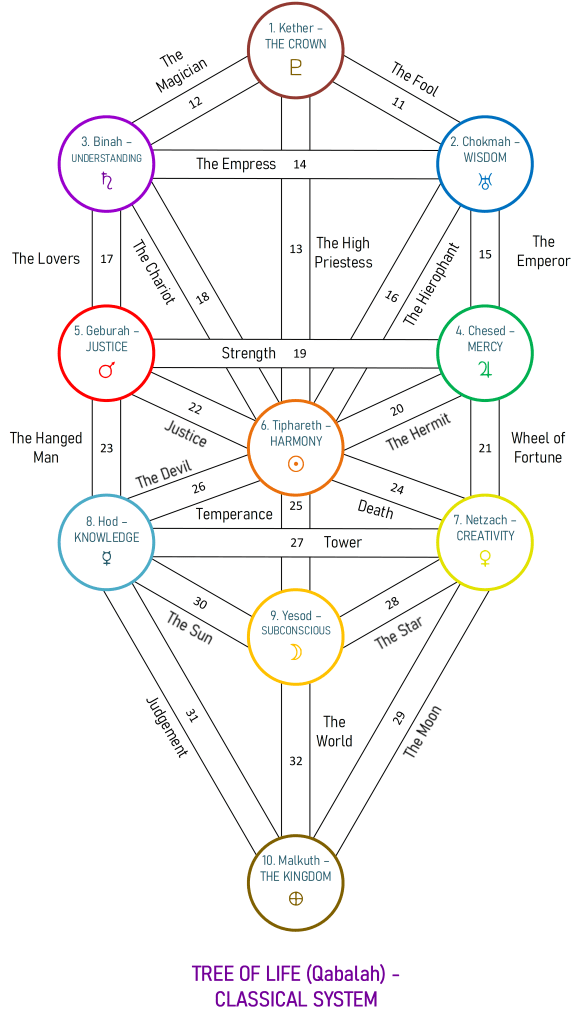
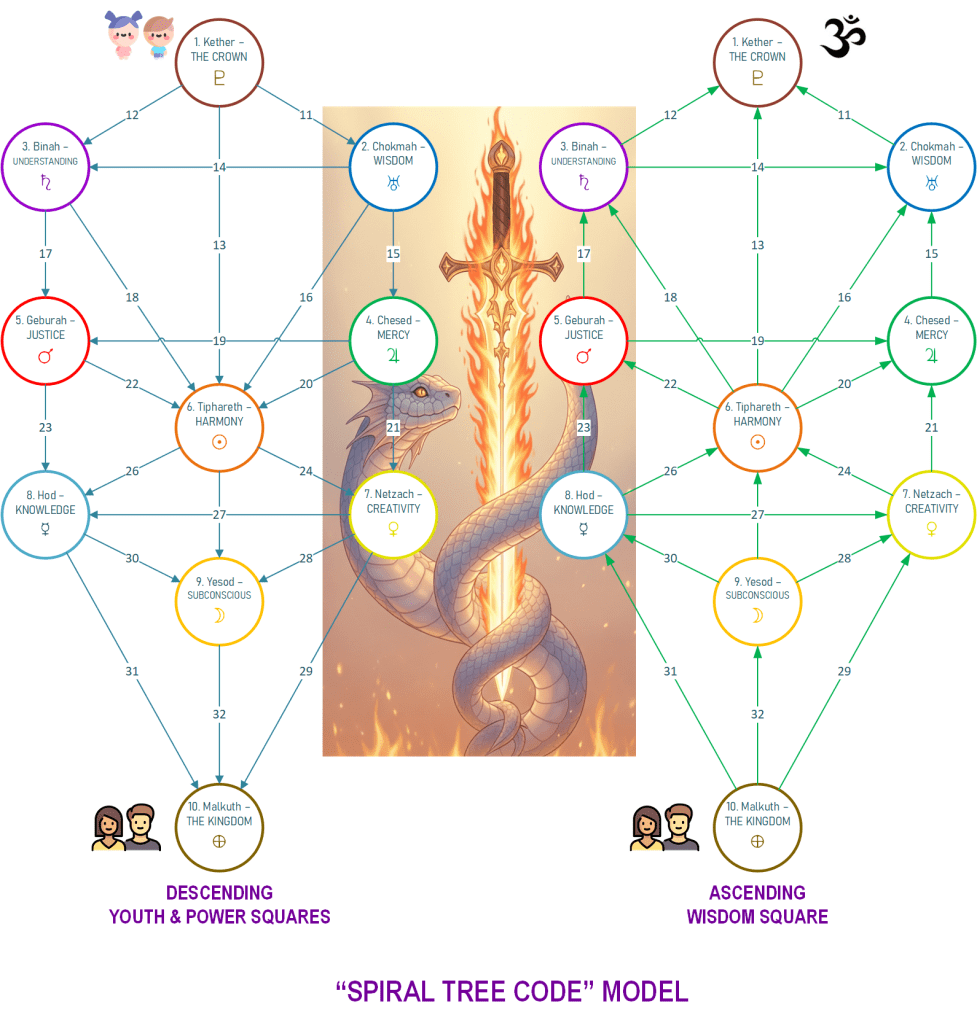
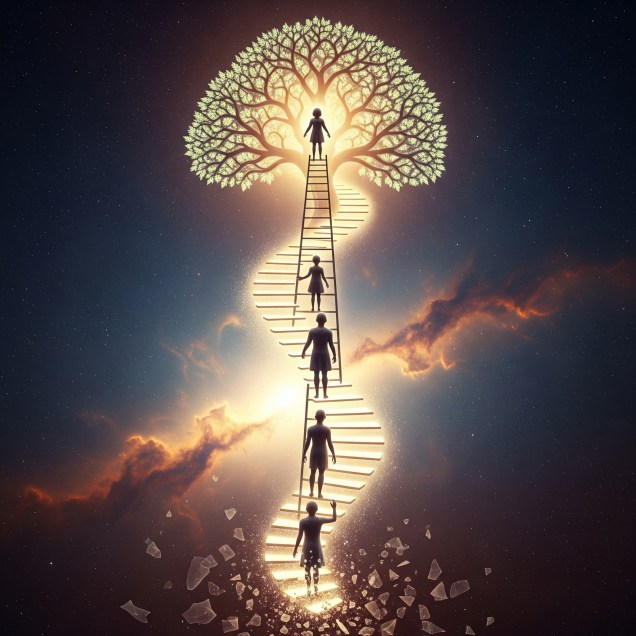
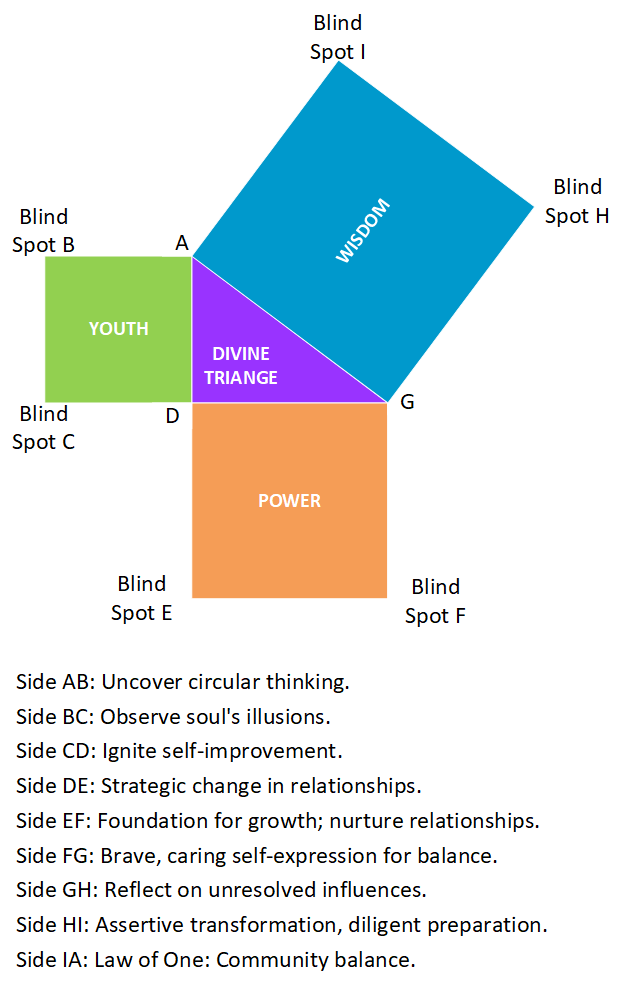
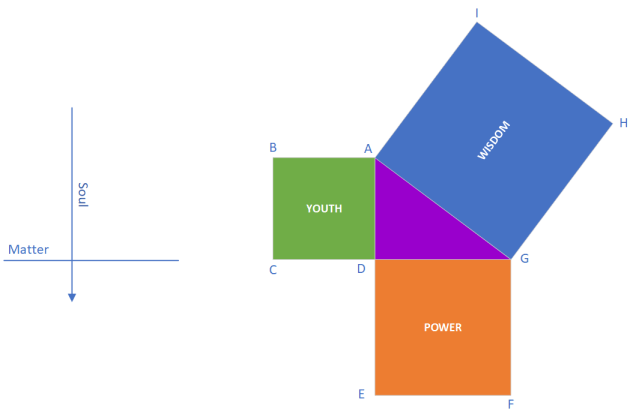
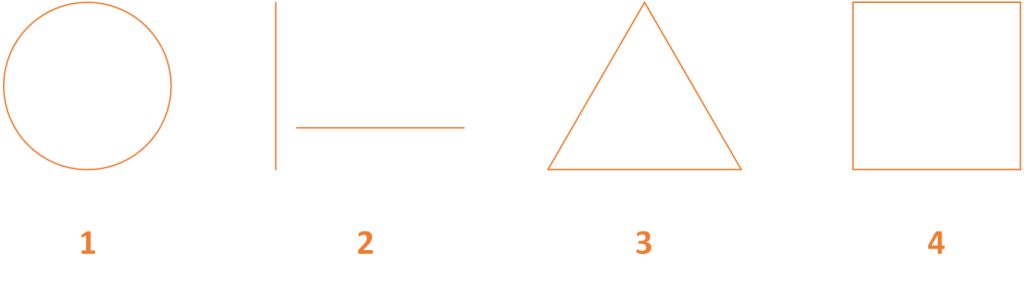
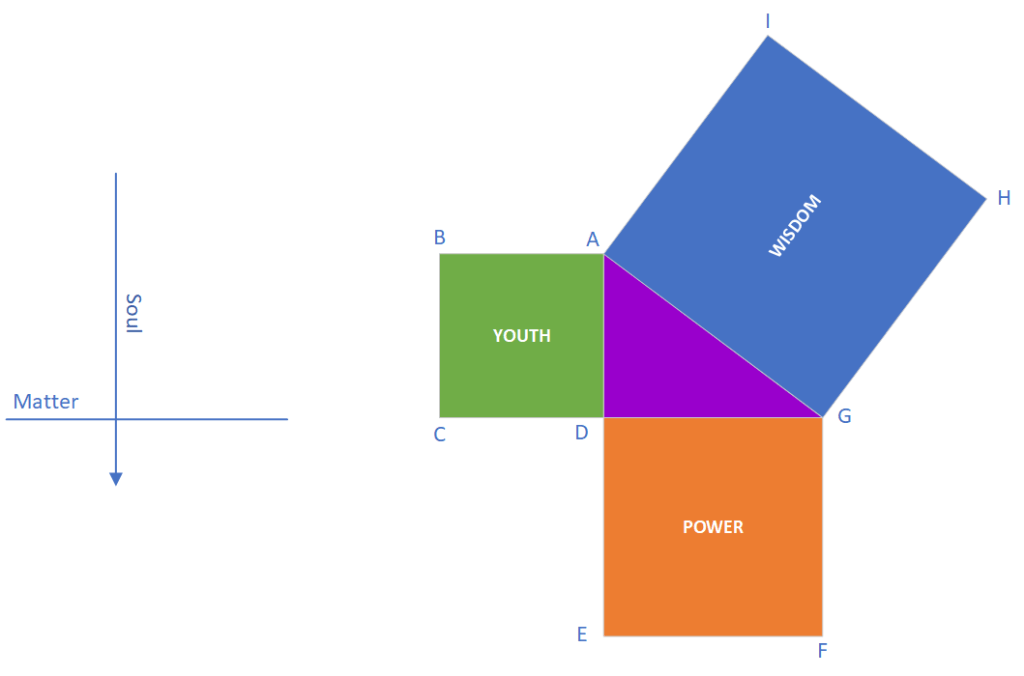
 The Sacred Journey